
BARÜ Project to Explore the Bioactive Potential of Eye Lens Proteins
3 Eylül 2026
A TÜBİTAK-supported project at Bartın University (BARÜ) aims to investigate various properties of proteins found in the eye lens and identify beneficial biomolecules with potential applications.
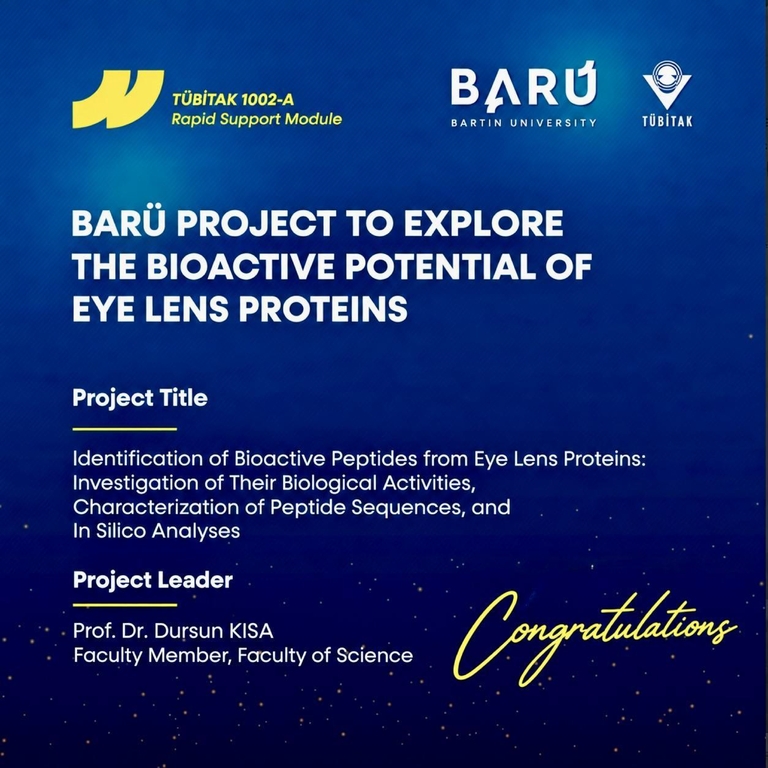
A project led by Prof. Dr. Dursun Kısa from the Department of Molecular Biology and Genetics at Bartın University (BARÜ) Faculty of Science has been awarded support under the TÜBİTAK-ARDEB 1002-A Rapid Support Module. Titled “Identification of Bioactive Peptides from Eye Lens Proteins: Investigation of Their Biological Activities, Characterization of Peptide Sequences, and In Silico Analyses,” the project will evaluate eye lens proteins as a novel source of bioactive peptides.
The project introduces an innovative approach to obtaining high-value-added biotechnological components from biological material with limited potential for direct use. Res. Asst. Dr. Kübra Sena Baş Topcu from the BARÜ Faculty of Science and Assoc. Prof. Dr. Zafer Ömer Özdemir from the Hamidiye Faculty of Pharmacy at the University of Health Sciences will contribute to the project as researchers, while master’s student Kübra Karaman will participate as a scholarship recipient.
Eye Lens Proteins to Be Examined Using Different Methods
Within the scope of the project, peptides will be obtained from eye lens proteins using enzymatic methods, and their various biological activities will be investigated. Peptides exhibiting biological activity will then be characterized through advanced analytical methods, and their peptide sequences will be identified.
The research will focus on enzyme inhibition, antimicrobial activity, and cell culture-based biological activities. The amino acid sequences of the peptides are planned to be determined through nanoLC-MS/MS analyses, while their structural and functional properties will be evaluated using computer-assisted in silico analyses.
Project Expected to Lay the Groundwork for Further Research
The findings obtained from the study are expected to provide a basis for future research examining the efficacy of these molecules and their potential biotechnological applications in greater detail. The project also aims to contribute to research on repurposing protein materials with limited direct-use potential and transforming them into biologically active, high-value-added molecules.
BARÜ Rector Prof. Dr. Ahmet Akkaya congratulated Prof. Dr. Dursun Kısa and the project team on receiving TÜBİTAK support for their innovative project and wished them continued success.
BARÜ Communications Coordination Office
Fotoğraflar