
BARU Stands Out with Its Academic Expertise in COP31 Themes
10 Kasım 2026
Bartın University (BARU) demonstrates its strong academic expertise in COP31-related themes through scientific research, postgraduate theses, and projects focusing on climate change, environmental sustainability, and green transformation.
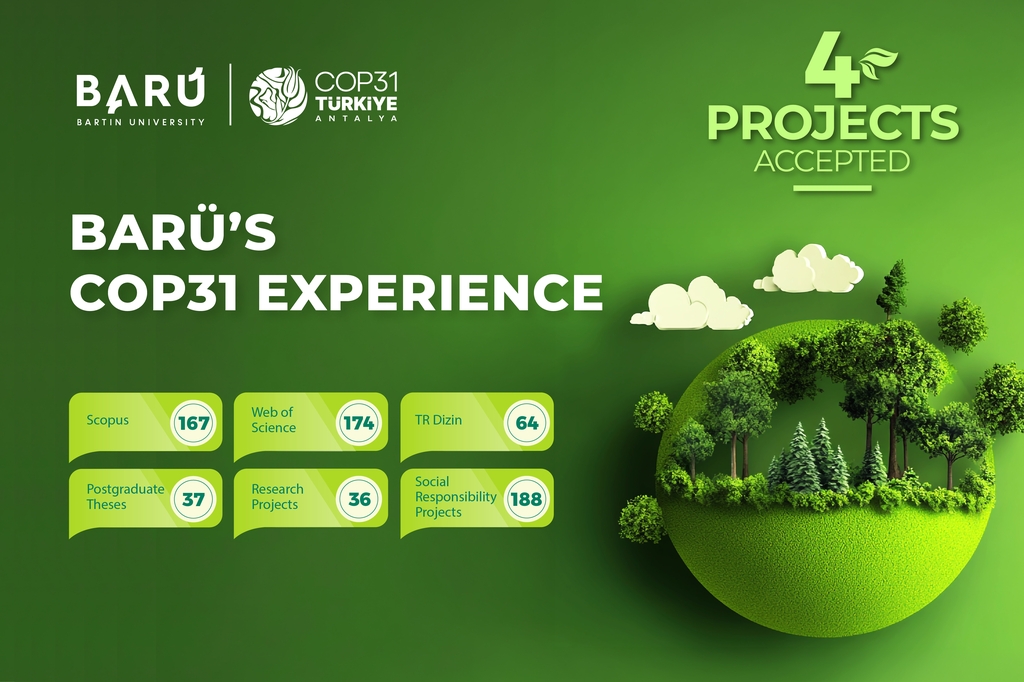
Climate action, carbon emission reduction, climate change adaptation, and sustainable development, which are among the key issues on the agenda of the 31st Conference of the Parties (COP31) to the United Nations Framework Convention on Climate Change, also hold an important place in the scientific studies conducted at Bartın University (BARU). According to a report prepared by BARU's Scientific Publications Coordination Office covering the period from 2008 to 2026, searches related to COP31 themes identified 174 publications indexed in Web of Science (WoS), 167 in Scopus, and 64 in TR Dizin. Academic output has increased particularly in recent years, with 39 publications indexed in Scopus, 33 in WoS, and 11 in TR Dizin in 2026.
37 Postgraduate Theses Focus on Climate-Related Issues
COP31 themes also feature prominently in BARU's postgraduate research. Between 2015 and 2026, a total of 37 theses addressing climate change and sustainability-related issues were completed, including 25 master's theses and 12 doctoral dissertations. Of these, eight were recorded in 2024 and 11 in 2026. The postgraduate research primarily focused on topics such as the impacts of climate change on forest ecosystems, drought, carbon storage, renewable energy, energy efficiency, sustainable urbanization, and climate change adaptation.
BARU Makes Scientific Contributions to a Sustainable Future
BARU is also carrying out interdisciplinary projects aligned with COP31 themes. These include mapping wildfire-prone areas, assessing flood and drought risks, developing green logistics practices to reduce carbon emissions, advancing sustainable packaging technologies, and improving waste management. Through these initiatives, research and awareness-raising activities help translate scientific knowledge into tangible benefits for society.
In addition, BARU continues to contribute to society through social responsibility projects focusing on the environment and sustainability. In this context, a total of 188 environmental social responsibility projects were carried out, including 41 in 2024, 76 in 2025, and 71 between January and June 2026.
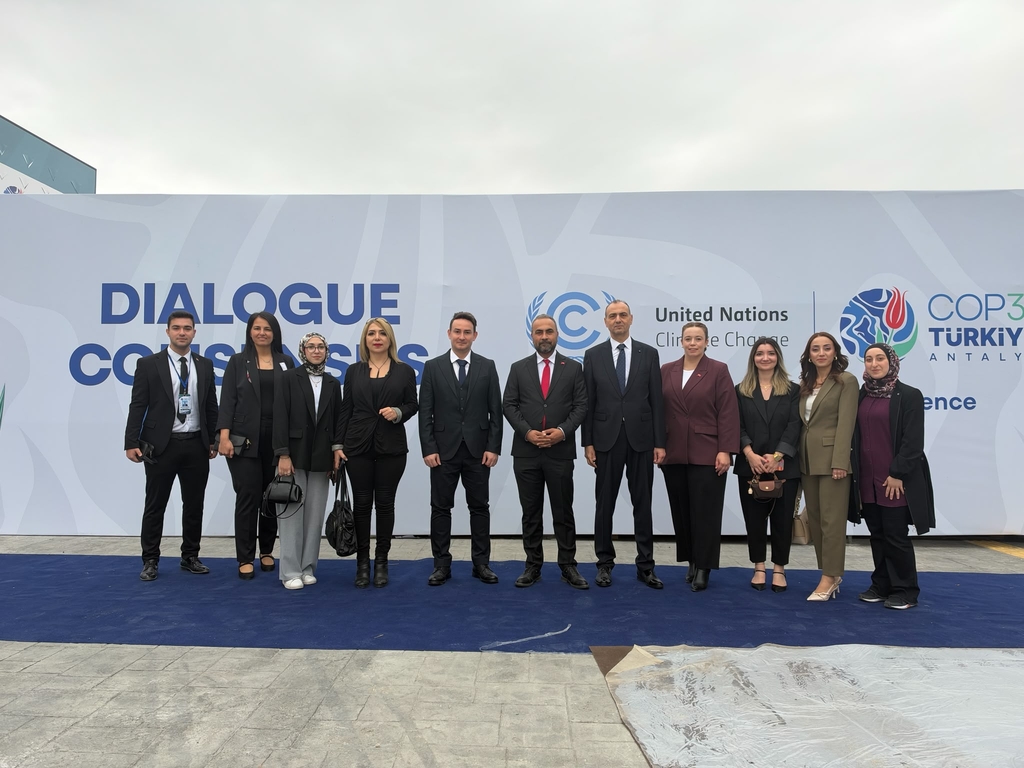
Four BARU Projects to Be Presented at COP31
Four of the six project proposals submitted by BARU for COP31 were accepted by the Council of Higher Education (CoHE). The projects to be presented by BARU at COP31 include a study led by Asst. Prof. Ercan Gemici aimed at reducing flood and water scarcity risks associated with climate change; research conducted by Prof. Ayhan Ateşoğlu and Research Assistant Fidan Şevval Bulut on mapping wildfire-prone areas at the wildland-urban interface; the GreenRoute Logistics project developed by Research Assistant Dr. Fatma Akgün and Dursun Berkay Esen to reduce carbon emissions in road transportation; and an inclusive climate change education project designed by Lecturer Nihal Özdemir for students with learning difficulties.
Rector Akkaya: “We Contribute to COP31's Global Climate Goals Through Our Scientific Expertise”
Commenting on BARU's scientific contributions to COP31 themes, Rector Prof. Ahmet Akkaya stated, “The academic expertise our university has developed in climate action, green transformation, environmental sustainability, and climate change adaptation, which are among the key issues addressed within the scope of COP31, is highly valuable. Through scientific publications, postgraduate theses, and social responsibility projects carried out across various disciplines, we contribute to developing solutions to global challenges. We attach great importance to transforming scientific knowledge into societal benefits and remain committed to conducting research that addresses local needs while contributing to global goals. I would like to thank our academics, researchers, and students who have contributed to these efforts.”
BARU Communications Coordination Office
Fotoğraflar
Haberler